Steam Body Solenoid Valves Dealer
Introduction
Established in 2005, Ammar Industrial Corporation is an authorised supplier, wholesaler, dealer, stockist, distributor, and retailer of precision-engineered pneumatic, hydraulic, instrumentation, and automation products and industrial process equipment based in Kolkata. Our range includes Air Preparation Unit, Pneumatic Solenoid Valve, Pneumatic Cylinder Actuator, hydraulic tools, fluid automation solenoid valves, etc. Our quality norms enable us to maintain and enhance our position in today’s competitive market. Ammar Industrial Corporation’s premium quality products are recognised as the most reliable firm. Moreover, we follow a quality policy to monitor these products before delivering them to customers.
Steam is widely used in industries for heating, cleaning, drying, sterilisation, and various manufacturing processes. To control steam flow safely and efficiently, industries need reliable valves that can operate under demanding working conditions. A steam body solenoid valve is an important component that helps control the flow of steam automatically in industrial systems.
Choosing the right Steam Body Solenoid Valves Dealer is essential for businesses that want dependable products, smooth operation, and long-term performance. A suitable valve can help improve process efficiency, reduce manual work, and support consistent temperature control in industrial applications.
Ammar Industrial Corporation offers industrial valve solutions for businesses looking for reliable components for their steam control and automation requirements. By understanding the working principles, types, applications, and benefits of steam body solenoid valves, buyers can make informed decisions for their operations. We are the best Steam Body Solenoid Valves Supplier.
What Is a Steam Body Solenoid Valve
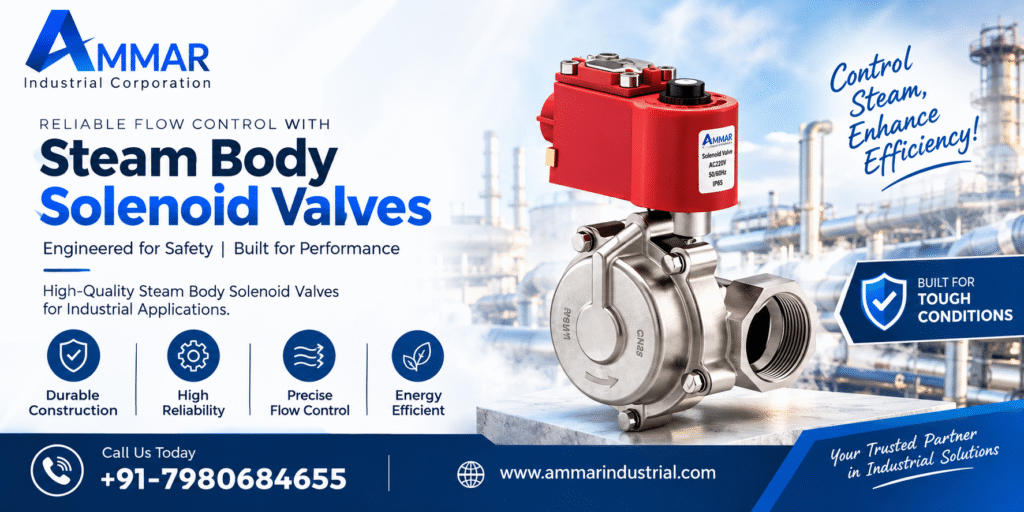
A steam body solenoid valve is an electrically operated valve designed to control the flow of steam through a pipeline. It uses an electromagnetic coil, called a solenoid, to open or close the valve when an electrical signal is applied. We are the best Steam Body Solenoid Valves Provider.
These valves are commonly used in automated systems where steam flow needs to be controlled without manual operation. Depending on the design, the valve may open or close when power is supplied or removed. Steam body solenoid valves are designed for applications involving elevated temperatures and specific pressure conditions. Therefore, it is important to select a valve with a suitable body material, seal material, pressure rating, temperature rating, and connection size.
Types of Steam Body Solenoid Valves
Different industrial processes require different valve designs. The following are some common types of solenoid valves used in steam control applications.
1. Normally Closed Steam Solenoid Valves
Normally closed valves remain closed when the solenoid coil is not energised. When the correct electrical supply is provided, the valve opens and allows steam to pass through.
These valves are useful when steam flow should stop automatically during a power interruption, provided the valve is operating correctly and the system is designed for this function.
2. Normally Open Steam Solenoid Valves
Normally open valves remain open when the solenoid coil is not energised. Applying electrical power changes the valve position and closes the passage.
These valves are suitable for specific processes where the default operating condition requires an open flow path. The appropriate configuration depends on the system’s safety requirements.
3. Direct-Acting Solenoid Valves
Direct-acting solenoid valves use electromagnetic force to move the valve mechanism directly. Their operation does not depend on a minimum pressure difference in the same way as pilot-operated designs.
They may be suitable for particular flow rates and pressure conditions, depending on the manufacturer’s specifications.
4. Pilot-Operated Solenoid Valves
Pilot-operated valves use the pressure difference across the valve to assist the opening and closing process. They are often used in applications requiring higher flow capacity.
However, the required minimum differential pressure must be checked before selecting a pilot-operated valve for a steam system.
5. Two-Way and Multi-Way Solenoid Valves
Two-way valves control flow through an inlet and an outlet. Multi-way valves have additional ports and can direct flow between different passages, depending on their design.
The correct arrangement depends on the piping layout and the intended function of the system.
Applications of Steam Body Solenoid Valves
1. Industrial Steam Boilers
Steam body solenoid valves are widely used in industrial boiler systems to control steam supply and support automated operations. They help regulate the movement of steam from boilers to connected equipment. These valves are suitable for applications where reliable on-off steam control is required. Selecting a valve designed for the operating temperature and pressure of the boiler is essential for dependable performance.
2. Textile and Garment Industries
Textile manufacturing requires steam for fabric processing, dyeing, drying, and finishing operations. Steam body solenoid valves help control the supply of steam to different machines, allowing operators to manage heating cycles more efficiently. They support consistent process conditions and help reduce unnecessary steam consumption when correctly selected and installed.
3. Food Processing Industries
Steam is commonly used in food processing for heating, cooking, cleaning, and other production activities. Steam body solenoid valves help automate the supply of steam to processing equipment and heating systems. They can be used in food production plants where controlled steam delivery is required. For applications involving direct food contact or hygienic processes, the valve materials and design must meet the relevant industry requirements.
4. Pharmaceutical Manufacturing
Pharmaceutical manufacturing facilities use steam in equipment heating, cleaning, and sterilisation processes. Steam body solenoid valves can control steam flow in suitable systems, helping maintain automated operating cycles. For pharmaceutical sterilisation, clean steam, or other critical processes, valves must be selected according to the required temperature, pressure, cleanliness, and applicable validation standards.
5. Chemical Processing Plants
Chemical industries use steam for heating tanks, reactors, pipelines, and process equipment. Steam body solenoid valves help control steam flow according to the requirements of the production process. They are useful in automated systems that require regular opening and closing of steam lines. The valve body, seals, and internal components should be compatible with the operating conditions and any chemicals present in the surrounding environment.
6. HVAC and Building Heating Systems
Heating, ventilation, and air conditioning systems may use steam to provide heat in commercial buildings, hotels, hospitals, and industrial facilities. Steam body solenoid valves help control steam flow to heating coils and other compatible equipment. They support automatic temperature management when integrated with suitable thermostats, controllers, and control systems.
7. Laundry and Dry-Cleaning Equipment
Commercial laundries and textile care facilities use steam in industrial washing machines, presses, and garment-finishing equipment. Steam body solenoid valves help regulate steam supply during heating and pressing cycles. Their automated operation can improve workflow and reduce the need for manual valve adjustment. Proper sizing and temperature compatibility are important for long-term performance.
8. Rubber and Plastic Manufacturing
Rubber and plastic manufacturing processes often require controlled heating for moulding, curing, and material processing. Steam body solenoid valves can regulate steam supply to suitable heating equipment and moulding systems. They help maintain the required process conditions and support repeatable production cycles when used with an appropriate control system.
9. Paper and Packaging Industries
Paper mills and packaging plants use steam in drying sections, heating systems, and certain production processes. Steam body solenoid valves help control the supply of steam to equipment that requires automated flow regulation. Reliable valve operation can support consistent heating and smoother production. Industrial users should confirm the valve’s flow capacity and compatibility with their steam distribution system.
Why Choose Ammar Industrial Corporation
1. Wide Range of Steam Body Solenoid Valves
A professional Steam Body Solenoid Valves Dealer can offer different valve types to meet the requirements of various industries. Depending on the application, buyers may need normally closed valves, normally open valves, direct-acting valves, or pilot-operated valves.
Having access to different options allows customers to select a suitable product for their steam control systems. The right valve selection helps improve process efficiency and supports dependable operation in industrial applications. Buyers should always verify that the selected valve is specifically designed for steam service and can handle the required temperature and pressure.
2. High-Quality Materials and Construction
Material quality is an important consideration when purchasing steam body solenoid valves. These valves operate under demanding conditions, including elevated temperatures, pressure variations, and repeated opening and closing cycles.
A trusted dealer can help customers identify valves manufactured from appropriate body materials, sealing components, and internal parts. Depending on the design and application, valve bodies may be made from brass, stainless steel, or other suitable materials.
Choosing a valve with steam-compatible seals and a temperature-rated coil helps reduce the risk of premature wear, leakage, and unexpected equipment failure. Buyers should review the manufacturer’s specifications before making a purchase.
3. Reliable Steam Flow Control
Accurate steam flow control is essential for maintaining stable industrial processes. Steam body solenoid valves use an electrical signal to open or close the valve, allowing automated control of steam supply.
A dependable dealer can recommend a valve that matches the required flow rate, pressure range, and operating conditions. Proper selection supports consistent heating, controlled steam distribution, and smooth equipment operation.
These benefits are particularly valuable in applications where steam must be supplied at specific intervals or controlled through automated production systems.
4. Technical Guidance and Product Selection
Selecting the correct steam body solenoid valve involves more than choosing a size or price. Buyers must consider operating pressure, steam temperature, flow capacity, voltage, connection type, and the valve’s operating mechanism.
An experienced Steam Body Solenoid Valves Dealer can help customers understand these requirements and narrow down suitable options. Technical guidance can also help identify whether a direct-acting or pilot-operated valve is appropriate for the application.
5. Improved Operational Efficiency
Using the right steam body solenoid valve can support better control over industrial operations. Automated valve operation reduces the need for manual intervention and helps coordinate steam supply with production requirements.
When correctly sized and installed, a suitable valve can help minimise unnecessary steam flow during periods when steam is not required. This may contribute to improved energy management and more consistent process performance.
6. Long-Term Durability and Performance
Industrial equipment must withstand repeated operation and challenging working conditions. Steam body solenoid valves should therefore be selected with careful attention to their construction, rated operating limits, and maintenance requirements.
A dependable dealer can provide information about product specifications, recommended operating conditions, and available replacement components. Choosing an appropriately rated valve can help reduce premature wear and support a longer service life.
7. Cost-Effective Purchasing
Price is an important factor when purchasing industrial valves, but the lowest-priced option may not always provide the best long-term value. An unsuitable valve can lead to leakage, maintenance expenses, production interruptions, or early replacement.
A reliable dealer can help buyers compare products based on quality, operating limits, application suitability, and expected maintenance needs. This approach allows businesses to evaluate the overall cost of ownership rather than focusing only on the initial purchase price.
8. After-Sales Support and Replacement Assistance
After-sales support is valuable when businesses need installation guidance, product documentation, troubleshooting information, or replacement components. A dependable dealer can help customers identify the correct product model and understand the manufacturer’s maintenance recommendations.
Access to suitable replacement coils, seals, and other serviceable parts, where available, can simplify maintenance planning. Buyers should also confirm warranty terms, product availability, delivery timelines, and technical support arrangements before placing an order.
9. Reliable Supply and Timely Delivery
Industrial production schedules often depend on the availability of suitable replacement components. Delays in sourcing a steam body solenoid valve can affect equipment repairs, planned maintenance, or new machinery installations.
A professional dealer can help customers check product availability, confirm specifications, and understand expected delivery schedules before placing an order. For businesses with multiple machines or ongoing maintenance requirements, maintaining a list of approved valve specifications can make future purchasing easier.
Frequently Asked Questions (FAQs)
1. What is a steam body solenoid valve used for?
A steam body solenoid valve controls the flow of steam in industrial pipelines and equipment. It is commonly used in heating systems, textile machinery, cleaning equipment, and automated manufacturing processes.
2. How does a steam solenoid valve work?
It uses an electromagnetic coil to operate a valve mechanism. When the appropriate electrical signal is applied, the mechanism changes position to open or close the steam passage, depending on the valve design.
3. How do I choose a steam body solenoid valve?
Check the operating pressure, maximum steam temperature, valve size, body material, seal compatibility, coil voltage, and required valve function.
4. Are all solenoid valves suitable for steam?
No. A valve must be specifically rated for steam service. Standard solenoid valves may not withstand the temperatures and pressures found in steam systems.
5. Which industries use steam body solenoid valves?
Textile, food processing, pharmaceutical, chemical, packaging, laundry, and other industrial sectors use suitable steam solenoid valves for automated process control.
6. What is the difference between normally open and normally closed valves?
A normally closed valve blocks flow when de-energised, while a normally open valve allows flow when de-energised. The appropriate option depends on the process and its safety requirements.
7. Where can I find a Steam Body Solenoid Valves Dealer?
You can contact Ammar Industrial Corporation to discuss your industrial valve requirements and confirm product availability, specifications, and suitability for your system.
Conclusion
Steam body solenoid valves play an important role in industrial automation by controlling steam flow in heating, cleaning, processing, and manufacturing systems. Selecting the correct valve helps improve operational control, reduce manual intervention, and support consistent performance. We are the best Steam Body Solenoid Valves in Kolkata.
Ammar Industrial Corporation aims to support industrial buyers looking for appropriate valve solutions for their operational needs. If your business is searching for a dependable Steam Body Solenoid Valves Dealer, contact Ammar Industrial Corporation to discuss your application and confirm the specifications of the product that best suits your system.